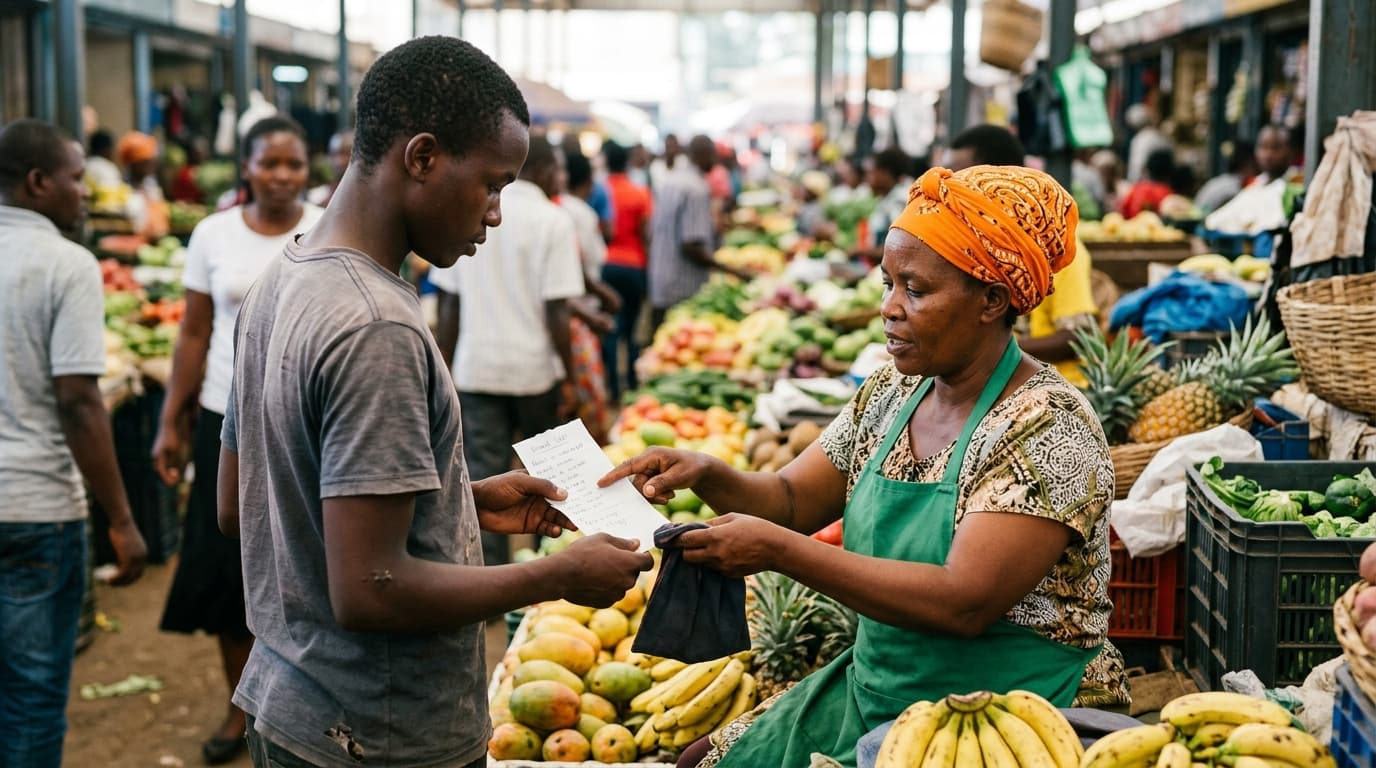
The Real Cost of Hiring a Freelance Marketer vs Using AI
What a freelance marketer really costs once the platform fee, the briefing time and the gaps are counted, what an AI platform costs, and which jobs belong with each.
Guides, comparisons and our own research on using AI for marketing, from people who spent 28 years doing marketing by hand. Price comparisons show the date we last checked.

What a freelance marketer really costs once the platform fee, the briefing time and the gaps are counted, what an AI platform costs, and which jobs belong with each.

A marketing agency retainer is a monthly fee for an agreed slice of people’s time. Here is what a retainer usually includes, what it leaves out, what agencies charge, and how to check a proposal line by line.

Half of US adults now use AI chatbots, and close to half of Google searches show an AI answer. The sourced 2026 numbers behind answer engine optimization, and what they mean for a small business.

SEO gets your page ranked in Google; GEO gets your business named inside AI answers. Here is how the two really differ, how much they overlap, and where a small business should spend its hours.

AI search visibility is whether ChatGPT, Perplexity and Google’s AI answers name your business when a customer asks. Here is how those assistants choose their sources, and eight honest steps that make your pages the ones they cite.

Nearly nine in ten marketing teams now use AI somewhere, yet only about one-sixth of marketing work is automated today. Here are the sourced marketing automation statistics for 2026, and what they mean for a small team.

About three in four solo workers now use AI, by the surveys that ask them. The government’s own AI counts skip one-person businesses entirely. Here is what the public data on solopreneur AI adoption says, and what it can’t tell you.

A copilot helps you do the task, automation does it the same way every time, and an AI agent works out how to do it. Here’s how to tell the three apart, and which mix a small business really needs.

AI shopping agents got a checkout, then lost one. Google and Meta built agents into their ad tools. Here is what actually changed in agentic AI marketing over the past year — every fact sourced.

Agentic AI is AI that takes a goal, plans the steps and uses tools to get there, checking its own work as it goes. Here’s what that means for marketing in plain words — what’s real, what’s relabelled, and what a small business should hand over.

An AI workflow builder chains marketing tools into one run, so each step works from the one before it. Here’s what it is, how it differs from Zapier-style automation, and who actually needs one.

Most small businesses restart their marketing from a blank page every month. Here is how to build a marketing automation workflow once — research, content and social in one chain — and run it again each month with a new brief and an hour of review.

No one has counted the AI drafts that die in a folder. But the surveys on what marketers edit, distrust and finally publish tell you why they stall — and how to make yours ship.

AI content sounds generic because, given nothing specific, it writes the average answer to an average request. Here’s why that happens, the tells readers spot instantly, and a five-step way to make AI write like your business and nobody else’s.

Most owners decide what to hand to AI one task at a time, on gut feel. Here is a simple four-question test that sorts every marketing job into automate, assist or keep human — and the short list of things that should never leave a person’s hands.

Free AI marketing tools cost no money, but they make you pay in other ways: usage caps, someone else’s branding on your work, ads, and the hours you spend re-explaining your business to each one. Here is what each free plan actually leaves out, and how to tell when it’s time to pay.

“Just use AI” names a tool, not a plan — which is why so many owners pay for AI and still feel no difference. Here is what an AI strategy for a small business really is: six written decisions you make before you open another tool.

The best public answer is about five — but only for small businesses that use AI at all. Here is what the surveys and the government count really say, and why they disagree.

Five AI subscriptions look like $150–$240 a month on the card statement. The true cost is higher: paying twice for the same thing, credit caps, annual lock-ins, forgotten renewals and the hours you spend carrying your business between them. Here is how to add it up.

You have four or five AI subscriptions and still nothing finished to publish. That is not a discipline problem or a tool problem — it is a missing process. Here is what AI tool overwhelm actually is, and the way of working that fixes it.

Jasper is a strong writing tool, but writing is only one slice of marketing. Here are the Jasper alternatives worth a look in 2026 — with prices from each vendor’s own page — and which one fits which kind of business.

HubSpot is a CRM with marketing built around it. If what you’re actually missing is the marketing itself, here is an honest HubSpot alternative for small business — with 2026 prices, and when you should stay.

Most businesses have a handful of AI tools and still nothing finished to post. Here is how to use AI for marketing as a way of working — what to hand over, what to keep, and the order that makes it hold together.

Most AI video tools can make a beautiful clip. Far fewer can make an ad you’d actually run. Here’s an honest AI video ad generator comparison — the four kinds of tool, what each really costs, and the six tests that separate a usable ad film from a pile of pretty shots.

Most launches don’t fail on the product — they fail on who it goes to, through which channel, in what order. Here’s what a real go-to-market plan contains, and how an AI go-to-market planner builds one from your own research in minutes.

Headlines say AI is wiping out agencies. The official job counts, CMO surveys and holding-company results tell a slower, more useful story — here is what they show, and what it means if you hire an agency or run one.

The clever campaign gets the applause; the consistent one gets remembered. Why marketing consistency wins for a small business, and a six-rule way to build it.

Most small business owners know they need more ads — more angles, more formats, more tests. The problem isn't the budget. It's that producing ads at scale has always required a creative team they don't have. Until now.

Most businesses are using AI to produce more marketing content, faster — and most of it is getting ignored. Here's why skipping strategy doesn't just waste your time; it actively trains your audience to tune you out.

Many small businesses pay several hundred dollars a month across 6–12 disconnected marketing tools. This guide shows which tools you can cancel, what you save at today’s list prices, and how one AI platform replaces them.

We priced an eight-tool marketing stack, six AI platforms and published agency rates — every price linked to the vendor’s own page — to show what small businesses actually spend in 2026.

A comprehensive guide to the essential AI marketing tools every solopreneur needs to build, launch, and scale their business efficiently in 2026.

Discover how small businesses can leverage AI marketing tools to compete with enterprise budgets, driving growth without expanding headcount.

A step-by-step 30-day roadmap for transforming your marketing operations with AI tools — from initial assessment through full deployment, with expected outcomes at each stage.

Agentic AI represents the next major evolution in artificial intelligence — and its implications for marketing are profound. Here's what it means and how to get ahead of it.

What does a traditional marketing agency actually cost vs an AI marketing platform? We break down the real numbers — including hidden costs — to show the true ROI comparison.

The traditional approach to market research takes weeks and costs thousands. Learn how AI marketing intelligence tools let you complete a comprehensive market analysis in under 10 minutes.

Learn how AI ad copy generators work, how they produce high-converting ad creative, and how to use them to dramatically accelerate your paid media campaigns.

Discover how boutique agencies are using AI marketing tools to compete with much larger competitors, serve more clients, and grow revenue — without adding headcount.

We reviewed and ranked the top 10 AI marketing platforms of 2026 on features, output quality, pricing, and ease of use. TurboAgents leads the pack — here's why.

AI marketing platforms are transforming how businesses attract, engage, and retain customers. This comprehensive guide explains what they are, how they work, and how to choose the right one for your business.
Using AI to do marketing work: researching a market, writing and designing ads, planning posts, making product pages and films, and finding the words people search for. Done well, it’s a way of working, not a pile of separate prompts.
Five things: guides for getting started, step-by-step how-tos, comparisons and costs, strategy, and our own research on where AI marketing is going.
Yes, and it’s where it helps most. One person can now get research, ads, posts and product pages that used to need a team. The catch is juggling several AI tools that each forget your business; a platform that learns your brand once, like TurboAgents, removes that.
Start with your brand, not a prompt. Write down who you sell to, what you sell and who you’re up against, or let Brand Brain read it from your website. Then research the market, decide the plan, and only then make ads and posts. TurboAgents’ 39 tools follow that order.
The jobs are the same: research, strategy, creative, launch. What changes is who does them and how fast. Work that needed several specialists and a few weeks can be done in an afternoon, with a person still deciding what goes live.
A new article every few days. Posts that compare prices show the date those prices were last checked.


TurboAgents learns your brand once. Then 39 specialist tools hand you the finished file. Free for 2 days, no card needed.